
Introduction
A subcontractor's active license tells you nothing about whether their insurance is still active.
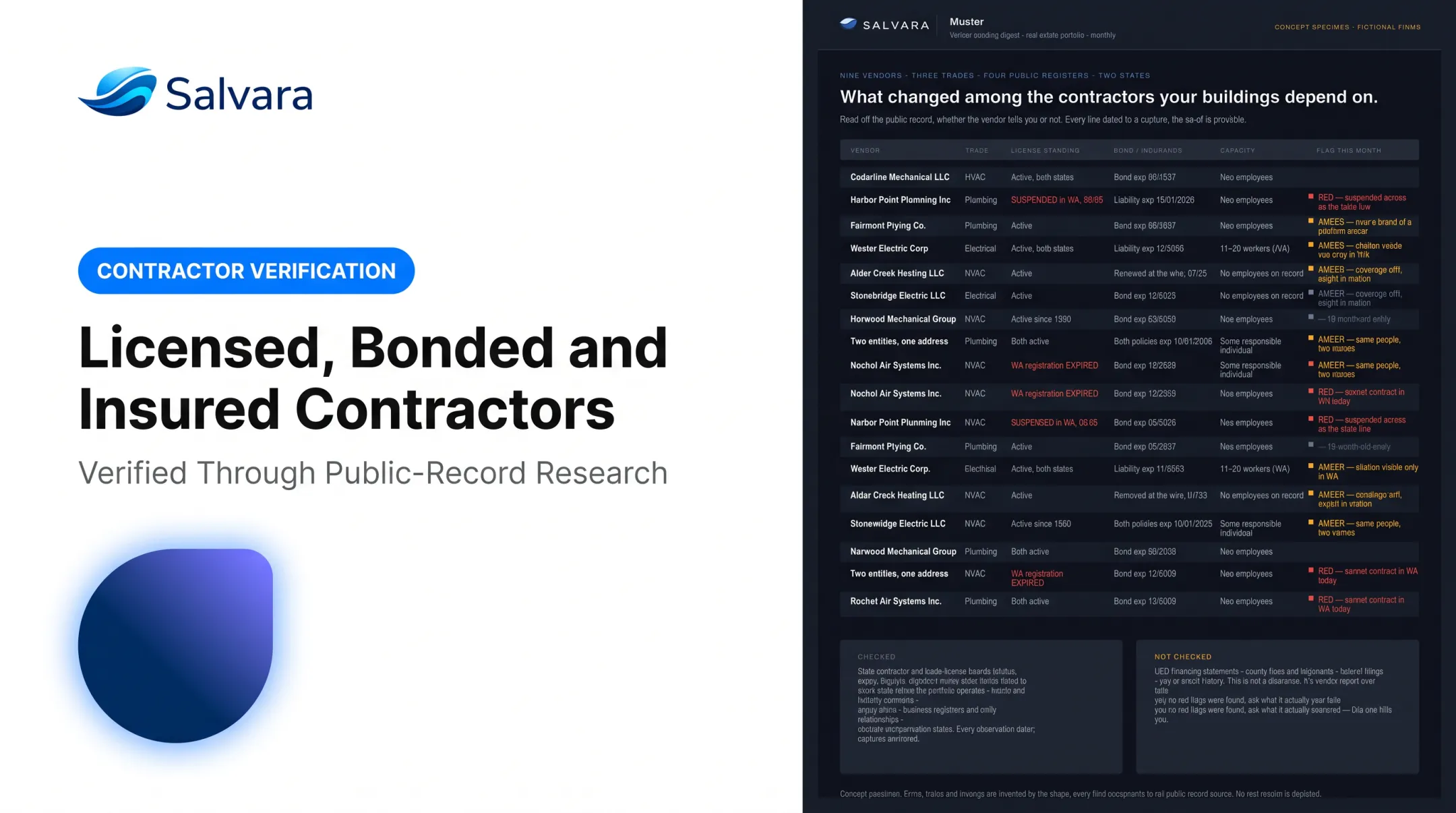
In one recent compliance review, a mechanical subcontractor's general liability policy was set to expire in 41 days, despite the contractor holding a current, valid license. Nobody on the project team knew until someone checked, the kind of lapse Muster is designed to surface.
That gap is where claims, delayed payments, and contract disputes start. An uninsured subcontractor can leave the hiring contractor or property owner holding the liability. A 2024 risk-adviser article warns that once a subcontractor's crew is on site, the owner or GC can be liable if the sub lacks proper coverage, and recommends collecting subs' certificates of insurance, including workers' compensation, before work starts.
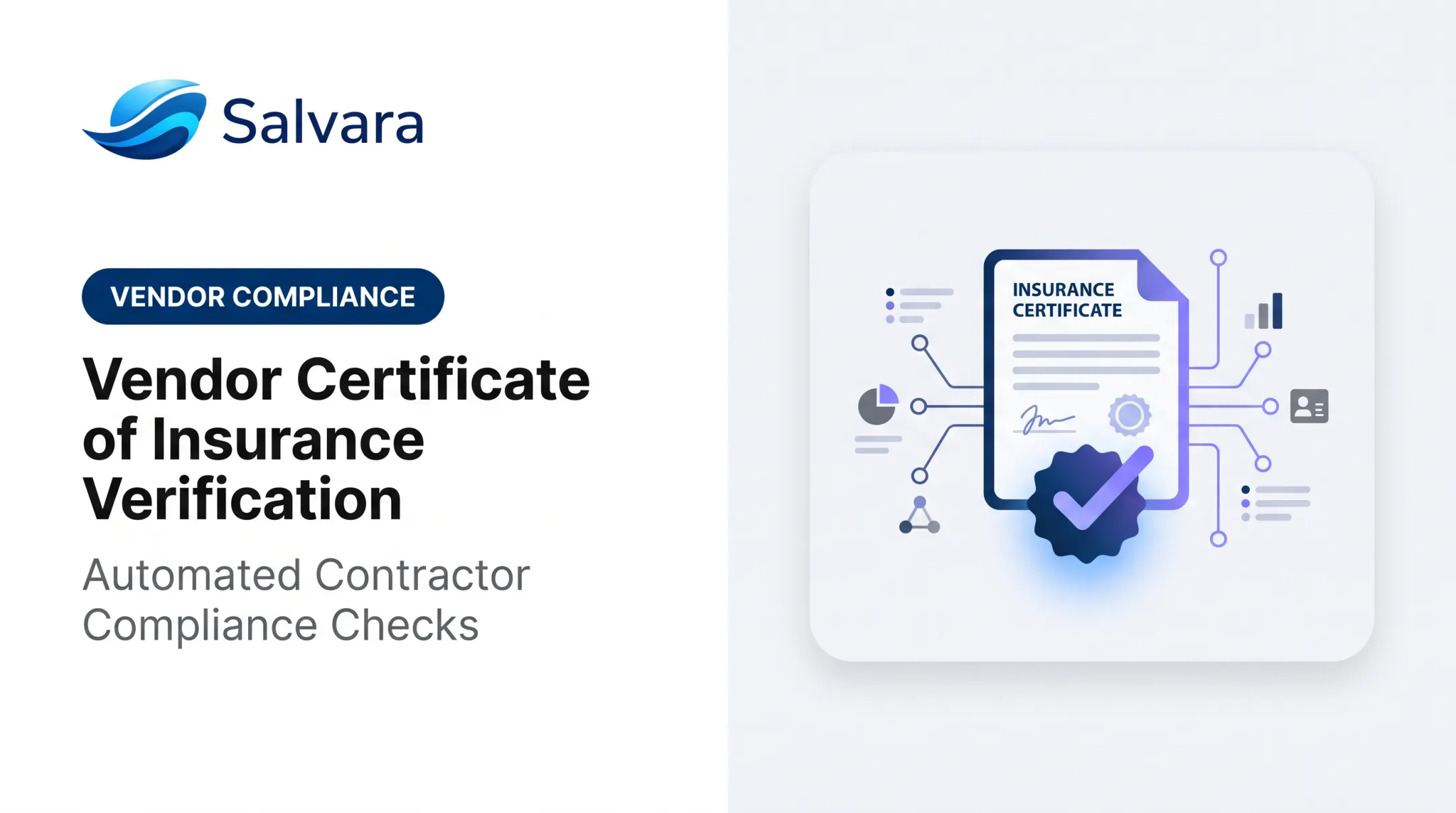
Most teams still manage this with email attachments and spreadsheets. Contractor insurance verification systems replace that patchwork with a single source of truth for certificates, policy details, renewal dates, and compliance exceptions.
This guide compares five leading platforms and breaks down how to choose one based on contractor volume, verification depth, monitoring needs, and integration requirements.
Key Takeaways
- A submitted COI does not prove coverage is active, adequate, or current.
- Automated expiration monitoring and exception workflows matter more than feature lists for GCs and property owners.
- Pricing, integrations, and verification methods vary by vendor and plan; confirm them directly before buying.
- No compliance platform replaces legal, broker, or risk-management review entirely.
Overview of Contractor Insurance Verification Systems in the US Market
A contractor insurance verification system is software that collects, organizes, reviews, and monitors evidence of contractor coverage, primarily certificates of insurance and the policy data behind them.
Collection Is Not Verification
This distinction trips up a lot of buyers. A COI is a snapshot, not a guarantee. ACORD's own FAQ on certificates states that a certificate is not an insurance policy and does not amend, extend, or alter the underlying policy.
Real verification means checking:
- Named insured matches the actual contractor on the job
- Policy dates span the full project timeline
- Limits meet contract-specified minimums
- Additional-insured and waiver-of-subrogation endorsements are actually attached, not just referenced
What Gets Reviewed — and When
Most reviews focus on these coverage types:
- General liability
- Workers' compensation
- Commercial auto
- Umbrella or excess liability
- Professional liability where design work is involved
Not every contract requires all five. Coverage needs are contract-, trade-, and jurisdiction-specific.
A typical workflow moves through these stages:
- Invitation — ask the contractor to submit proof of coverage
- Upload and extraction — capture the document and pull data via OCR or manual entry
- Requirement matching — check submitted data against contract-specific rules
- Exception review — flag gaps or mismatches for resolution
- Approval and monitoring — clear the contractor, then track through renewal
This matters differently depending on who's running it. A property owner managing 15 vendors has different needs than a GC juggling 200 subcontractors across multiple active projects. A multi-site retail operator has a different risk profile again.

The systems below are a research shortlist. Confirm current features and pricing directly with each vendor before deciding.
Best Contractor Insurance Verification Systems
The strongest systems combine configurable insurance requirements, automated monitoring, usable workflows, and credible evidence of verification depth. Feature count alone does not decide the winner.
| System | Best For | Monitoring | Verification Method | Integrations | Pricing Model |
|---|---|---|---|---|---|
| myCOI | Mid-to-large contractor/vendor rosters | Automated reminders, proactive alerts | Document review with expert checks | Procore, MRI, Sage 300, Vista, CMiC, Yardi, API | Not publicly disclosed |
| TrustLayer | Construction owners, developers, GCs | Expiration/renewal alerts, Smart Requirements | AI document extraction; API-based carrier data in select cases | Procore, CMiC, Vista Viewpoint, open API | Free up to 50 vendors; paid tiers undisclosed |
| Certificial | Supplier/procurement compliance monitoring | Real-time alerts for lapse or cancellation | Network-connected "Smart COI" data refreshed on a recurring basis | Insurance Tracking API, software partners | Free up to 5 suppliers; Professional from $99/month |
| Jones | Construction GCs, CRE owners/operators | Renewal reminders, audit trails | OCR plus human risk-specialist review | Procore (nightly sync), Sage 300 CRE, REST API | Per-record annual, quote-based |
| bcs | SMB to mid-market vendor/tenant compliance | Automated renewal follow-up | Rules-based AI/OCR with escalation to human review | Procore, MRI, Yardi, API | Free up to 25 vendors; from $0.95/vendor/month |
myCOI
myCOI, whose platform now runs under the illumend name, handles contract and requirement intake, one-click contractor invitations, renewal reminders, and compliance alerts for construction and property-management workflows.
Document scanning is paired with review against customer-set standards. Prebuilt integrations cover Procore, MRI, Sage 300, Vista, CMiC, and Yardi, including a 2024 expansion that syncs compliance data with Procore Pay.
The trade-off: pricing isn't published, and some users have reported slower reviews or limited customization of requirements. It's a strong fit for organizations managing large rosters, but it may be more than a small contractor list needs.
TrustLayer
TrustLayer's construction product targets project owners, developers, GCs, and subcontractor-compliance teams. Its plans include AI-based document collection and classification, expiration management, and configurable "Smart Requirements."
Verification depth varies by case. TrustLayer's partnership with Nationwide introduced an on-demand API that pulls policy data directly from the source, but only where the relevant carrier connection exists.
Most activity still runs on document-based AI review. Integrations include Procore, CMiC, Vista Viewpoint, and a developer API.
The trade-off: the free tier covers up to 50 vendors, but paid pricing isn't public. Confirm which contractors' carriers actually support source-connected verification before assuming it's universal.
Certificial
Certificial's Requestor product lets compliance and procurement teams request contractor coverage, compare it against minimum requirements, and get alerts on lapses, cancellations, or inadequate limits.
Its "Smart COI" is the differentiator. For policies on Certificial's network, data refreshes from participating agents' systems rather than a one-time static PDF. An Insurance Tracking API exchanges coverage and requirement-level data with other applications.
The trade-off: this real-time advantage only applies to in-network policies. Off-network contractors still rely on standard document review. Pricing starts free for up to 5 suppliers, with Professional from $99/month and Enterprise quote-based.

Jones
Jones focuses squarely on construction GCs and commercial real estate owners. It automates COI and policy intake, runs AI-assisted checks with human-verified review, flags rule gaps, and maintains audit trails.
Its Procore integration requests subcontractor documents and syncs compliance status nightly, a latency gap rather than real-time visibility. Jones also offers bidirectional integrations, a REST API, and a Sage 300 CRE connection added in 2024.
The trade-off: pricing runs on a per-record annual model with quotes required. The human-review approach adds credibility but isn't the same as a live carrier feed.
bcs
bcs (Business Credentialing Services) collects contractor and vendor certificates, checks dates, limits, and coverage types against requirements, and automates renewal follow-up. Its approach combines rules-based logic with AI/OCR and escalates ambiguous cases to human review.
Integrations include Procore, MRI, and Yardi, plus an open API for custom connections.
The trade-off: pricing is unusually transparent: free up to 25 vendors, self-service at $0.95/vendor/month, and full service starting at $17.80/vendor/year with a $10,000 annual minimum. Check how integration charges apply to your plan before you budget.
How We Chose the Best Systems
This comparison draws on public vendor documentation, product pages, and independent user reviews, not vendor marketing claims alone. Those claims are often incomplete or promotional.
Evaluation focused on:
- Verification depth: date, limit, endorsement, and carrier checks versus certificate of insurance (COI) storage alone
- Ongoing monitoring: automated alerts, re-verification after policy changes, and visibility into unresolved exceptions
- Workflow fit: contractor self-service onboarding, bulk uploads, OCR accuracy, and configurable requirements by project or trade
- Integrations: native connections versus API-only or custom work, and whether data flows in both directions
- Governance: audit trails, timestamped reviewer actions, exportable reports, and support for independent review

Common Selection Mistakes
Buyers consistently make a few avoidable errors:
- Treating a submitted COI as proof of active coverage, rather than a point-in-time snapshot
- Choosing a platform based on the longest feature list instead of actual verification depth
- Ignoring exception-handling needs until a real gap surfaces mid-project
- Skipping a trial with real, messy contractor documents before committing
- Underestimating implementation time and total cost beyond the sticker price
Conclusion
The best contractor insurance verification system is the one that matches your contractor volume, risk tolerance, and existing workflow, not necessarily the one with the most automation on its homepage.
Before committing, pressure-test the platform:
- Run real contractor documents, not demo data
- Confirm how it escalates missing or ambiguous information
- Recheck compliance rates after a few months, not only at setup
For organizations that also need broader diligence (ownership structures, license standing across states, or counterparty research beyond insurance), a source-verified intelligence resource like Salvara can complement a COI platform. It is not a substitute for insurance verification, but it can round out the picture when a contractor relationship involves more than a certificate on file.
If you want evidence-based research alongside your COI process, open a free Salvara workspace and run your first contractor check yourself.
Frequently Asked Questions
What systems are used to verify insurance?
Most buyers use certificate of insurance (COI) management platforms, broker or carrier confirmation workflows, insurer portals, or internal compliance systems. The right mix depends on coverage complexity and how deep verification needs to go.
What is the difference between a COI and insurance verification?
A COI summarizes reported coverage at a single point in time. Verification confirms whether that information actually meets contract requirements and, where necessary, whether the policy is still active.
What should a contractor insurance verification system check?
At minimum: policy type, effective and expiration dates, limits, carrier, and named insured. Also confirm additional-insured wording, waiver requirements, workers' compensation status, and any project-specific conditions.
How often should contractor insurance be verified?
Verify before onboarding or work begins, then monitor through renewal or material-change alerts. Frequency should follow contract terms, project risk, and policy duration, not a fixed calendar rule.
Can a COI management system verify that a policy is active?
It depends on the vendor. Some systems only organize documents and flag dates; others connect to brokers or carriers for updated policy data. Confirm the exact evidence and fallback process before relying on it.
What features matter most for a small business?
Prioritize simple contractor onboarding, configurable requirements, automatic expiration reminders, and clear exception handling. Exportable audit reports and transparent pricing that avoids duplicate data entry matter too.